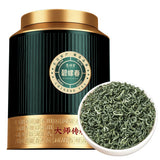
Early Spring Bi Luo Chun Green Tea | 碧螺春 · Heritage Tin


Early Spring Bi Luo Chun Green Tea | 碧螺春 · Heritage Tin
Bi Luo Chun is a green tea you can recognize before you even taste it. Fine spring leaves are rolled into compact spirals, their surfaces carrying delicate white down, giving the dry tea a silvery-green appearance. This early-spring selection is presented in a dark green and gold heritage tin and is built around the qualities that make the Bi Luo Chun style distinctive: tender leaf, concentrated spring aroma, graceful movement in water and a fresh, aromatic cup.
Why Bi Luo Chun Became One of China’s Most Celebrated Green Tea Styles
The name Bi Luo Chun (碧螺春) is often translated as “Green Snail Spring” — a reference to its green color, tightly curled snail-shell-like form and spring harvest tradition. Historically, the classic tea is closely associated with Jiangnan tea culture and the Dongting region around Lake Tai in Jiangsu. Its fame comes from an unusual combination of visual delicacy and powerful fragrance: extremely tender leaves can look tiny and restrained when dry, yet release an expansive floral, fruity and fresh-green aroma once infused.
This lot highlights the visual markers tea drinkers look for in the style: white down over the leaf (白毫披覆), tightly curled spirals (卷曲成螺), a silver-green tone and visibly tender buds. Unlike Longjing, Bi Luo Chun is not pressed flat. Its identity comes from rolling and curling, which concentrates the dry leaf into fine spirals that gradually loosen in the cup.
Tasting Notes
- Aroma: spring flowers, fresh green leaf, a light fruity sweetness and soft roasted-green warmth.
- Texture: light, smooth and lively rather than heavy.
- Flavor: fresh vegetal sweetness with a more fragrant, lifted character than many pan-fired greens.
- Finish: clean, sweet and gently floral, designed for repeated sipping rather than a single powerful infusion.
What the Curled Leaf Tells You
Bi Luo Chun’s shape is part of the experience. The dry leaves look like tiny coiled springs, often dusted with fine white hairs from very young buds. Add them to water and the coils begin to relax. In a clear glass, the leaves descend, rise and open at different speeds, creating a layered scene of moving buds in pale green-gold liquor.
That movement is one reason fine Chinese green tea is traditionally enjoyed in transparent glassware: you are not only tasting the tea, you are watching the leaf return from a compact dried form to something closer to the living spring shoot.
Traditional Glass Brewing — A Tea Worth Watching
For a delicate cup and the best visual effect, use a tall clear glass.
- Tea: about 3g per 150ml water, or 4–5g per 250ml
- Water: 75–80°C / 167–176°F
- Method: pour water first, then gently add the leaves for a traditional top-infusion style
- First infusion: approximately 60–90 seconds
- Re-steep: 2–3 times, extending the time gradually
The top-infusion approach is especially attractive with fine, tender Bi Luo Chun. The small spirals fall through the water and unfold slowly, allowing you to see the leaf structure while keeping the cup gentle and fragrant.
Bi Luo Chun vs Other Chinese Green Teas
Versus Longjing / Dragon Well: Longjing is famous for flat, pan-fired leaves and a more obvious chestnut, toasted-bean and nutty character. Bi Luo Chun is curled, finer and typically more floral-fruity and aromatic. If Longjing feels architectural and composed, Bi Luo Chun feels more perfumed and spring-like.
Versus Huangshan Mao Feng: Mao Feng usually shows longer, more open bud-and-leaf shapes with soft orchid and vegetal notes. Bi Luo Chun is more tightly rolled and creates a different visual performance as the spirals open.
Versus jasmine-scented green tea: Bi Luo Chun’s fragrance comes from the tea leaf itself rather than added flower scenting. The aroma is therefore more integrated with the leaf’s natural sweetness and vegetal character.
Tea Culture & the Meaning of Spring Freshness
Chinese green-tea culture places special value on early spring because cooler-season growth produces tender buds and a delicate aromatic character. Bi Luo Chun turns that seasonal idea into something visible: fine buds, white down and tight curls all signal the style’s emphasis on young leaf. It is a tea for slow mornings, quiet work sessions, refined afternoon tea, and gifting to someone who wants to understand why Chinese green teas can taste dramatically different from one another.
Presentation
The dark green and gold heritage tin makes this tea easy to display on an open tea shelf, scholar’s desk or modern Chinese-style tea station. Pair it with clear glassware, pale celadon or white porcelain so the brilliant spring-green leaf remains the visual focus.
Product Details
- Tea type: Chinese green tea
- Style: Bi Luo Chun / 碧螺春
- Leaf appearance: curled spirals with visible white down
- Seasonal style: early spring / pre-rain green tea
- Packaging: 1 heritage tin
- Form: loose leaf
FAQ
Is Bi Luo Chun supposed to be flat like Longjing?
No. That contrast is one of the easiest ways to distinguish them. Longjing is characteristically flat and pan-pressed; Bi Luo Chun is rolled into fine curls or spirals.
What are the fine white hairs on the leaves?
They are natural down on tender tea buds, commonly called bai hao (白毫). They are a familiar visual feature of fine spring-picked teas.
Should I rinse this green tea?
A rinse is not necessary. Use cooler water and begin drinking from the first infusion so you keep the most delicate aromatics.