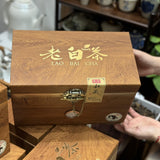
2015 Fuding Aged Shou Mei White Tea 500g | 福鼎老白茶 · Jujube Aroma Gift Box


2015 Fuding Aged Shou Mei White Tea 500g | 福鼎老白茶 · Jujube Aroma Gift Box
A 2015 Fuding aged white tea in loose-leaf form, presented in a substantial 500g wood-style gift box. With more than a decade of maturation behind the harvest year, this Shou Mei style tea moves far beyond the fresh, grassy delicacy many people associate with white tea. The profile is deeper and rounder, with the dried-fruit sweetness and date-like aroma traditionally described as zao xiang (枣香).
Why Fuding Aged White Tea Is Famous
Fuding in Fujian is one of the most important names in Chinese white tea. White tea became distinctive because of how little the leaf is manipulated compared with green, oolong or black tea. The traditional sequence centers on withering and drying, allowing the leaf’s own chemistry and moisture loss to shape the final character without the forceful pan-firing, rolling or full oxidation used for many other tea categories.
When white tea is stored over time, its fresh hay, floral and leafy notes can evolve toward dried fruit, honey, wood, date-like sweetness and a warmer aged fragrance. This transformation is why older Fuding white tea has developed a strong following among Chinese tea drinkers: the same category can move from delicate and spring-like when young to mellow and layered after years of aging.
Leaf Appearance: Why It Looks So Different from Green Tea
This tea is made from mature leaf material typical of Shou Mei style white tea, so the dry leaf naturally appears broader, more varied and more rustic than a needle-shaped Silver Needle or flat Longjing. Expect shades of brown, olive, tan and dark green rather than the bright emerald uniformity of a fresh green tea.
It is also important to understand what is not happening here. Longjing is shaped by 扁平炒青 — flat pan-firing; Bi Luo Chun is rolled into tight curls. White tea is neither. Its visual identity comes from relatively intact leaves that have been withered and dried, then transformed gradually during storage.
Tasting Notes
- Aroma: dried date, warm hay, honey, aged wood and a soft herbal tone.
- First sip: rounded and mellow, with significantly less sharp green-tea freshness.
- Mid-palate: dried-fruit sweetness and gentle woody depth build as the infusion strengthens.
- Finish: soft, warming and persistent, with date-like sweetness lingering after the cup.
The Beauty of Brewing Aged White Tea
Fresh green tea is often admired for vivid green leaves suspended in a glass. Aged white tea offers a different kind of visual ritual. The dry brown-and-olive leaves gradually soften, darken and open, while the liquor shifts from warm gold toward amber and orange with longer infusions. The contrast between rustic dry leaf and clear glowing liquor is one of the pleasures of aged white tea.
Because mature Shou Mei leaf is robust, the same portion can be brewed repeatedly. After several gaiwan infusions, it can also be transferred to a small kettle for simmering, producing a fuller and sweeter cup.
Traditional Gaiwan Brewing
- Tea: 5g per 100–120ml
- Water: 95–100°C / 203–212°F
- First infusion: 10–15 seconds
- Later infusions: extend gradually by 5–10 seconds
- Expected style: multiple infusions with increasing sweetness and depth
Unlike delicate spring green tea, aged white tea benefits from hotter water. Heat helps open the mature leaves and reveal the deeper dried-fruit and aged aromas.
Optional Kettle Brewing
For a traditional winter-style preparation, use 6–8g in approximately 500ml water. Bring to a gentle simmer for several minutes, then rest briefly before serving. Refill with water and simmer again as the liquor becomes lighter. This method emphasizes sweetness, body and the tea’s date-like character.
How It Differs from Other Chinese Teas
Versus Longjing green tea: Longjing is fresh, flat, pan-fired and often nutty or chestnut-like. Aged Shou Mei is broad-leafed, mellow, honeyed and dried-fruit driven, with no bright pan-fired green profile.
Versus Bi Luo Chun: Bi Luo Chun is curled, highly aromatic and spring-fresh. Aged white tea is visually looser and darker, with far more depth from storage and far less grassy freshness.
Versus young white tea: a fresh Shou Mei or Bai Mu Dan can show hay, flowers and soft melon-like sweetness. A 2015 tea has had years for these notes to deepen into warmer dried-fruit, woody and date-like tones.
Versus ripe Pu-erh: both can feel mellow, but the sensory direction is different. Ripe Pu-erh commonly leans earthy, woody and fermentation-driven; aged white tea is usually cleaner, sweeter and more dried-fruit/honey oriented.
Versus black tea: black tea is fully oxidized during manufacture and often shows malt, cocoa or ripe fruit. White tea begins with minimal processing, then develops complexity gradually through aging.
Tea Culture: The Appeal of Time
Aged white tea reflects a different Chinese tea philosophy from the race for the newest spring green. Instead of celebrating only freshness, it celebrates transformation. A 2015 harvest lets the drinker compare what time can do to a minimally processed leaf: soften edges, deepen sweetness and create a more contemplative cup.
The wood-style presentation box reinforces that sense of age and ceremony, making this 500g format suitable for a tea cabinet, scholar-style tea room, family sharing or a substantial gift for someone exploring Chinese aged teas.
Product Details
- Tea type: aged Chinese white tea
- Style: Shou Mei / 寿眉
- Origin: Fuding, Fujian, China
- Harvest year: 2015
- Net weight: 500g
- Form: loose leaf
- Character: aged, mellow, date-like / jujube aroma
- Packaging: wood-style presentation gift box
FAQ
Why is aged white tea darker than fresh white tea?
Time gradually changes the leaf’s color, aroma and flavor. Older white tea naturally develops browner leaves and a deeper liquor than freshly made white tea.
Why use near-boiling water?
Mature aged leaves are more robust than tender green tea. Hotter water helps release their deeper sweetness and layered aged aroma.
Can this tea be boiled?
Yes. After several normal infusions, aged Shou Mei is especially well suited to gentle simmering in a small kettle.
How should I store it?
Keep it dry, clean, sealed from strong odors and protected from direct sunlight. Stable storage is especially important for tea intended for long-term keeping.